
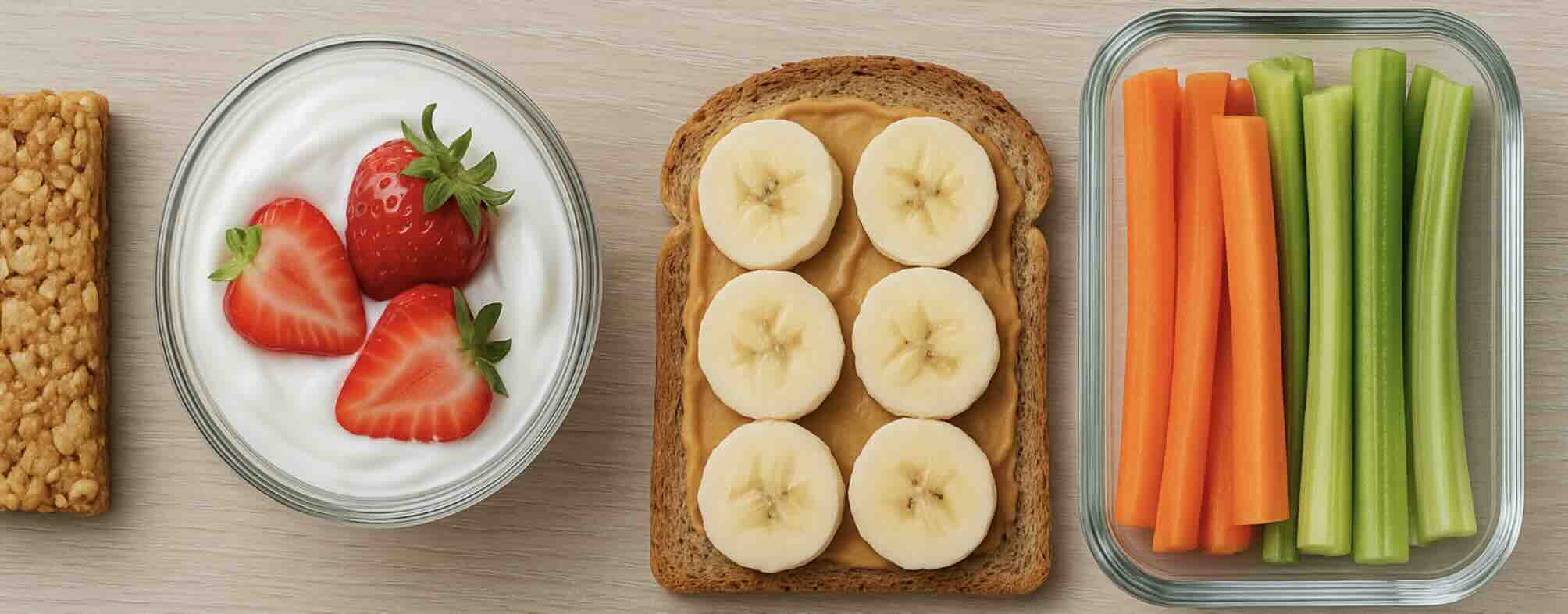
The best blood-sugar-balancing snacks combine protein, fiber, and healthy fat, with a modest amount of slowly digested carbohydrate—for example, Greek yogurt with berries and chia, an apple with peanut butter, hummus with vegetables, a handful of nuts, or hard-boiled eggs. This pairing slows how quickly glucose enters your bloodstream, which helps you avoid the spike-and-crash cycle and keeps energy steadier between meals. Below you'll find the simple pairing rule, a table of 20 snacks with approximate carbs, fiber, and protein, and a plain-English explanation of glycemic index vs. glycemic load.
Important: These snacks are for keeping blood sugar steady. They are not how to treat low blood sugar (hypoglycemia). If your blood sugar is low, you need fast-acting carbohydrate first—see treating low blood sugar below. If you take insulin or a sulfonylurea, follow the plan from your care team.
Table of Contents
How Snacks Affect Blood Sugar
When you eat carbohydrate, your body breaks it down into glucose, which enters the bloodstream. In response, the pancreas releases insulin to help move that glucose into cells for energy or storage. How high and how fast your blood glucose rises depends on several things:
- How much carbohydrate you eat. Quantity is the biggest factor.
- What kind of carbohydrate. Refined starches and sugars (white bread, crackers, candy, juice) are digested quickly. Intact whole grains, beans, and whole fruit are digested more slowly.
- What it's eaten with. Protein, fat, and fiber slow stomach emptying and digestion, leading to a gentler rise.
- Food form. A whole apple has a smaller effect than the same apple as juice; whole oats differ from finely ground instant oats.
- Your own body. Activity level, sleep, stress, medications, and conditions like insulin resistance or diabetes all change the response.
A quick, large rise is often followed by a faster fall. For many people that dip shows up as hunger, fatigue, irritability, or cravings—the classic afternoon crash. A balanced snack smooths the curve. If cravings are your main problem, our guide to snacks that curb sugar cravings picks up from here.
The Protein + Fiber + Fat Pairing Rule
The easiest way to build a blood-sugar-friendly snack is to never let a carb eat alone. Pair any carbohydrate with at least one (ideally two) of these:
- Protein — Greek yogurt, cottage cheese, eggs, cheese, edamame, tuna, turkey, tofu, beans, protein-rich dips. Aim for roughly 7–15 g per snack.
- Fiber — vegetables, berries, apples and pears with the skin, chia and flax seeds, beans and lentils, whole grains, popcorn. Aim for 3 g or more.
- Healthy fat — nuts, seeds, nut butters, avocado, olives, olive oil, cheese.
Easy pairings
| Instead of this alone… | …pair it with |
|---|---|
| An apple or pear | Peanut butter, a cheese stick, or a handful of nuts |
| Crackers | Tuna, hummus, or cheese (and choose whole-grain crackers) |
| A banana | Half a banana with Greek yogurt or almond butter |
| Toast | Avocado and an egg, or cottage cheese and tomato |
| Berries | Plain Greek yogurt or cottage cheese plus chia |
A practical carb range: most balanced snacks land around 10–25 g of carbohydrate. People with diabetes are often advised to keep snacks near a specific target (commonly around 15 g), but the right number depends on your meal plan and medications. For more high-protein ideas, see our list of protein-rich snacks.
20 Blood-Sugar-Balancing Snacks
Each of these combines protein, fiber, and/or fat with a modest carb load. Values are approximate and rounded; check labels for packaged items.
| # | Snack (portion) | Carbs (g) | Fiber (g) | Protein (g) |
|---|---|---|---|---|
| 1 | Plain Greek yogurt (¾ cup, 2%) + ½ cup raspberries + 1 tbsp chia | ~18 | ~8 | ~19 |
| 2 | 2 hard-boiled eggs | ~1 | ~0 | ~12 |
| 3 | Small apple + 1 tbsp peanut butter | ~24 | ~5 | ~4 |
| 4 | 1 oz almonds (about 23) | ~6 | ~3.5 | ~6 |
| 5 | ¼ cup hummus + 1 cup carrot, cucumber & pepper sticks | ~16 | ~5 | ~6 |
| 6 | ½ cup cottage cheese + ½ cup cherry tomatoes | ~8 | ~1 | ~13 |
| 7 | Cheese stick + small pear | ~23 | ~5 | ~7 |
| 8 | Roasted chickpeas (about ⅓ cup) | ~20 | ~5 | ~6 |
| 9 | Edamame, shelled (½ cup) | ~7 | ~4 | ~9 |
| 10 | Avocado deviled eggs (2 halves) | ~2 | ~1 | ~6 |
| 11 | Turkey & cheese roll-ups (2 oz turkey + 1 slice cheese) | ~2 | ~0 | ~16 |
| 12 | Chia pudding (2 tbsp chia + ¾ cup unsweetened soy milk + ¼ cup berries) | ~17 | ~10 | ~9 |
| 13 | 1 slice whole-grain toast + ¼ avocado + 1 egg | ~17 | ~5 | ~11 |
| 14 | 3 cups air-popped popcorn + 1 tbsp parmesan | ~19 | ~3.5 | ~5 |
| 15 | 1 oz walnuts + ½ cup blueberries | ~15 | ~4 | ~5 |
| 16 | Tuna (2.5 oz pouch) + 5 whole-grain crackers | ~15 | ~2.5 | ~17 |
| 17 | 1 oz pumpkin seeds (shelled) | ~4 | ~2 | ~8 |
| 18 | 2 celery stalks + 2 tbsp almond butter | ~8 | ~4.5 | ~7 |
| 19 | ¼ cup black bean dip + 1 cup bell pepper strips | ~19 | ~7 | ~5 |
| 20 | 10 g square 85% dark chocolate + 10 almonds | ~6 | ~3 | ~4 |
Recipes that fit: our avocado deviled eggs, roasted chickpeas, chia pudding (use unsweetened milk and go light on sweetener), Greek yogurt parfait (use plain yogurt and a small sprinkle of granola), and Mediterranean cucumber bites. No-bake energy balls contain dates, so keep it to one ball and pair it with a protein. You'll find more ideas in our low-sugar category and the main low-sugar snacks guide.
Glycemic Index vs. Glycemic Load
You'll often see "low-glycemic" used to describe foods that are gentle on blood sugar. Two related measures are behind that label:
| Glycemic index (GI) | Glycemic load (GL) | |
|---|---|---|
| What it measures | How quickly a food's carbohydrate raises blood glucose compared with pure glucose (GI 100), using a fixed amount of carbohydrate (usually 50 g) | GI adjusted for the amount of carbohydrate in a typical serving: GL = GI × grams of carbs per serving ÷ 100 |
| Low | 55 or less | 10 or less |
| Medium | 56–69 | 11–19 |
| High | 70 or more | 20 or more |
| Best used for | Comparing similar carb foods (e.g., steel-cut vs. instant oats) | Judging the real-world impact of a portion you'd actually eat |
Why glycemic load is usually more useful
GI ignores portion size. Watermelon is a classic example: it has a high GI (in the 70s), but a typical serving contains relatively little carbohydrate because it's mostly water, so its glycemic load per serving is low (single digits). On the other hand, a big bowl of a medium-GI food can have a high glycemic load simply because the portion is large.
Limits to keep in mind
- GI values are measured on single foods eaten alone. Adding protein, fat, fiber, or acid (like vinegar or lemon) lowers the response of a mixed snack.
- Ripeness, cooking time, and processing change GI. A riper banana or softer-cooked pasta has a higher GI.
- Low GI doesn't automatically mean healthy—some sweets have a low GI because of their fat content.
- Individual responses vary, sometimes a lot. If you use a glucose meter or continuous glucose monitor, your own readings are the best guide.
The practical takeaway: choose mostly whole, minimally processed carbs (beans, intact grains, whole fruit, vegetables), keep portions moderate, and pair them with protein or fat. That gets you most of the benefit without memorizing GI tables.
Best Snacks by Situation
For steady energy at work
Hummus and veggies, Greek yogurt with berries, almonds, or a turkey-and-cheese roll-up. Keep a few shelf-stable options (nuts, roasted chickpeas, tuna pouches, whole-grain crackers) in your desk. Our guides to 3 PM energy slump snacks and energy-boosting snacks have more.
Low-carb and diabetes-friendly
Eggs, cheese, nuts and seeds, edamame, turkey roll-ups, celery with almond butter, avocado deviled eggs, and cottage cheese with tomatoes all come in under about 10 g of carbs.
Before exercise
For a workout within an hour or two, a little more carbohydrate is useful: an apple with peanut butter, a small banana with yogurt, or toast with nut butter. For refueling afterward, see our post-workout recovery snacks.
Evening and bedtime
If you're hungry before bed, a small protein-rich snack such as cottage cheese, Greek yogurt, a few walnuts, or a hard-boiled egg is a good choice. If you have diabetes and experience overnight lows, ask your care team whether a bedtime snack is right for you.
Snacking With Diabetes or Prediabetes
- Snacks aren't mandatory. Many people with type 2 diabetes don't need snacks; others benefit from them, especially if meals are far apart or they take certain medications. Ask your care team what fits your plan.
- Count the carbs in snacks. They count toward your daily total just like meal carbs.
- Be wary of "diabetic" or "sugar-free" sweets. They may still contain refined flour, maltitol, or a lot of calories, all of which can affect blood sugar or weight.
- Test and learn. If you monitor your glucose, checking about 1–2 hours after a new snack shows how your body handles it.
- Watch drinks. Juice, sweetened coffee drinks, and smoothies can carry more carbohydrate than a snack.
Treating Low Blood Sugar Is Different
Safety note: Everything above is about preventing spikes and dips. If your blood sugar is actually low—generally below 70 mg/dL, or with symptoms such as shakiness, sweating, confusion, fast heartbeat, or irritability—protein, fat, and fiber are the wrong tools because they slow down sugar absorption.
The American Diabetes Association recommends the "15-15 rule":
- Take 15 grams of fast-acting carbohydrate, such as glucose tablets (check the label for the dose), ½ cup (4 oz) of juice or regular (not diet) soda, or 1 tablespoon of sugar or honey.
- Recheck your blood sugar after 15 minutes.
- If it's still below 70 mg/dL, repeat.
- Once it's back in range, eat a balanced snack or meal if your next meal is more than an hour or so away, to help keep it from dropping again.
Avoid treating a low with chocolate, nut butter, or other high-fat foods, because the fat slows down how fast the sugar works. Severe low blood sugar (when someone can't safely swallow or is unconscious) is an emergency that needs glucagon and/or emergency services.
If you take insulin or a sulfonylurea (such as glipizide, glyburide, or glimepiride), you are at higher risk of lows. Follow the specific hypoglycemia plan from your doctor or diabetes care team, and talk to them before changing your snacking pattern. If you have frequent unexplained lows or don't have diabetes but experience low-blood-sugar symptoms, see a healthcare provider. This article is general information; see our health disclaimer.
Common Snacking Mistakes
- "Healthy" carbs on their own. Rice cakes, pretzels, granola bars, and fruit alone can still spike blood sugar. Add a protein or fat.
- Drinking your snack. Juice, sweetened lattes, and large fruit smoothies deliver fast sugar with little fiber.
- Oversized portions of good foods. A whole bag of trail mix or a huge bowl of granola adds up fast. Portion into a bowl.
- Long gaps, then grazing. Going five or six hours without eating and then snacking nonstop leads to swings. Plan a snack about 3–4 hours after a meal if you're hungry.
- Trusting the front of the package. "Natural," "no refined sugar," and "made with fruit" can still mean lots of sugar. Check the Added Sugars and Total Carbohydrate lines.
Feeding kids too? The same pairing rule works for them—see our low-sugar snacks for kids.
Frequently Asked Questions
What snacks keep blood sugar stable?
Snacks that combine protein, fiber, and healthy fat with a modest amount of carbohydrate work best. Good examples are plain Greek yogurt with berries and chia, an apple with peanut butter, hummus with vegetables, nuts, hard-boiled eggs, cottage cheese, edamame, and roasted chickpeas.
What is the best snack for a diabetic?
There is no single best snack, but good choices are low in added sugar, contain protein or healthy fat, and have a carbohydrate amount that fits your meal plan. Examples include eggs, cheese with a small piece of fruit, Greek yogurt with berries, nuts, edamame, and vegetables with hummus. Your care team can help you set a carbohydrate target.
What is the difference between glycemic index and glycemic load?
Glycemic index ranks how quickly a fixed amount of a food's carbohydrate raises blood glucose compared with pure glucose. Glycemic load adjusts for a realistic serving size by multiplying the glycemic index by the grams of carbohydrate in the serving and dividing by 100. Glycemic load is usually more useful for real-world choices.
What should I eat if my blood sugar is low?
If your blood sugar is below 70 mg/dL or you have low-blood-sugar symptoms, the American Diabetes Association recommends the 15-15 rule: take 15 grams of fast-acting carbohydrate such as glucose tablets or half a cup of juice or regular soda, recheck after 15 minutes, and repeat if it is still low. Once it is back in range, eat a balanced snack or meal if your next meal is not soon. If you take insulin or a sulfonylurea, follow your care team's plan.
Can I treat low blood sugar with peanut butter or chocolate?
It is not recommended. Fat and protein slow down how quickly sugar is absorbed, so these foods raise blood sugar too slowly to treat a low. Use fast-acting carbohydrate first, then have a balanced snack once your blood sugar is back in range.
How many carbs should a blood-sugar-friendly snack have?
Many balanced snacks contain about 10 to 25 grams of carbohydrate. People with diabetes are often advised to aim for a specific amount, commonly around 15 grams, but the right number depends on your meal plan, activity, and medications.
Is fruit bad for blood sugar?
Whole fruit can fit into a blood-sugar-friendly diet. Berries, apples, pears, and citrus are good choices because of their fiber. Keep portions moderate, eat whole fruit rather than juice, and pair it with protein or fat such as yogurt, cheese, or nuts.
Do I need to snack between meals to balance blood sugar?
Not necessarily. Many people do fine with three balanced meals. A snack is helpful if meals are more than four or five hours apart, if you get very hungry, or if your diabetes care team recommends one because of your medications.
The Bottom Line
Blood-sugar-balancing snacks aren't complicated: keep carbs moderate, choose whole and minimally processed sources, and always pair them with protein, fiber, or healthy fat. Use glycemic load rather than glycemic index alone to judge real portions, and let your own body—or glucose readings—be the final guide. And remember the exception: when blood sugar is actually low, fast-acting carbs come first, following the plan from your care team.
About This Guide
Written and maintained by the HealthSnackIdeas Editorial Team. We build our snack guides from publicly available nutrition research and dietary guidelines (USDA FoodData Central, Dietary Guidelines for Americans, WHO). This content is for general information only and is not a substitute for advice from your doctor or a registered dietitian. Read our health disclaimer.
Related Articles
Snacks That Curb Sugar Cravings
20 sweet-tasting, low-sugar snacks and a craving-moment playbook.
30 Protein-Rich Snacks to Keep You Full
High-protein options that make any snack more filling and steady.
Low-Sugar Snacks That Actually Taste Amazing
Our main guide to low-sugar snacking and reading sugar on labels.