
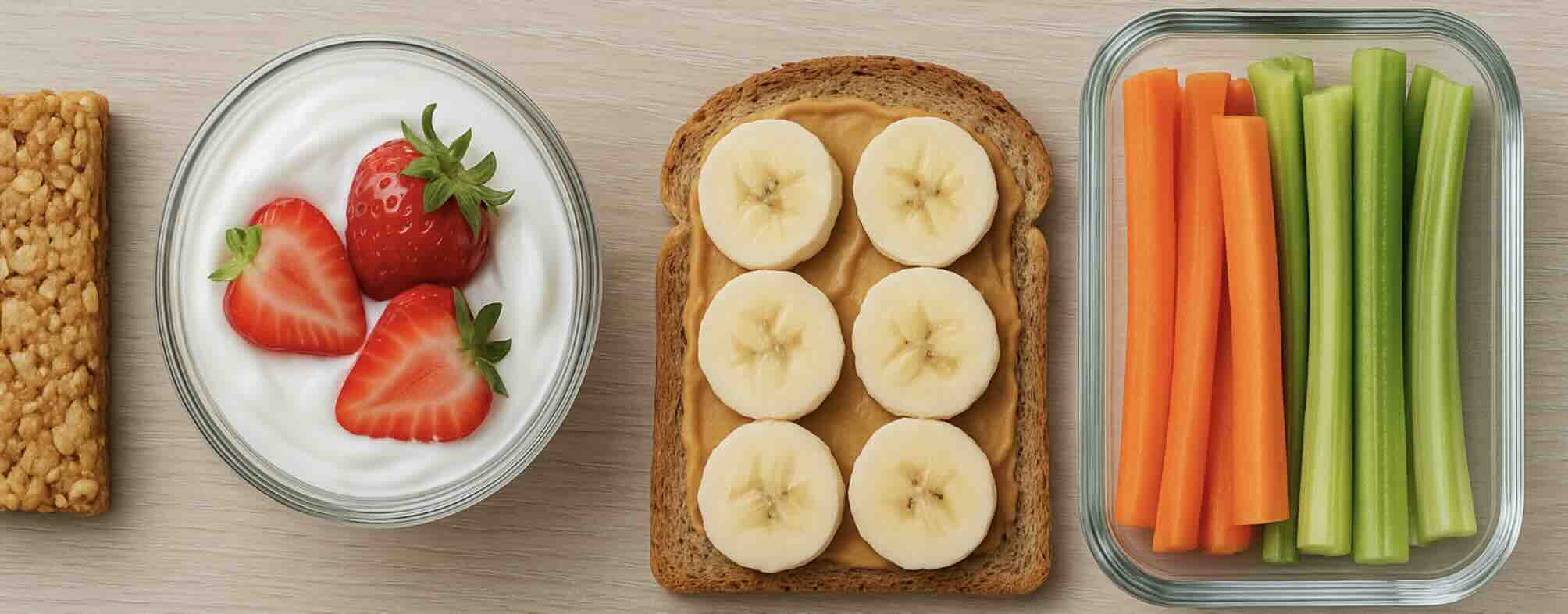
Quick answer: the most filling snacks between meals pair protein with fiber or volume. Aim for roughly 15–20 g of protein per snack: think cottage cheese with fruit, plain Greek yogurt or skyr with berries, two hard-boiled eggs with veggies, a cup of edamame, or tuna salad with crunchy vegetables. Below you'll find a quick-pick table, 30 ideas with approximate protein for each, and simple ways to make any snack keep you full longer.
Protein tends to be the most satisfying macronutrient calorie for calorie, so a protein-based snack is one of the easiest ways to avoid arriving at dinner starving. You don't need supplements or special products—most of the options below are everyday foods. Browse more ideas in our high-protein snacks category.
Table of Contents
Quick Picks: 12 High-Satiety Protein Snacks
Protein and calorie figures are approximate (USDA FoodData Central ballpark) and vary by brand and portion.
| Snack | Approx. protein | Approx. calories | Why it's filling |
|---|---|---|---|
| Cottage cheese (1 cup, low-fat) + peach slices | 25 g | 220 | High protein for the calories; fruit adds fiber and volume |
| Plain Greek yogurt (6 oz, nonfat) + berries | 16 g | 140 | Thick, protein-dense; berries add fiber |
| Skyr (5.3 oz) + 1 Tbsp chopped walnuts | 16 g | 150 | Protein plus a little fat slows digestion |
| 2 hard-boiled eggs + cherry tomatoes | 13 g | 170 | Protein and fat; veggies add crunch and volume |
| Shelled edamame (1 cup) | 18 g | 190 | Protein and about 8 g fiber in one food |
| Tuna (3 oz can) + Greek yogurt, on cucumber rounds | 20 g | 140 | Lean protein with high-water vegetables |
| Turkey roll-ups (3 oz) with avocado and bell pepper | 16 g | 180 | Protein, healthy fat, and crunchy veg |
| Hummus (1/3 cup) + raw vegetables | 6 g | 180 | Fiber and volume; pair with an egg or cheese to boost protein |
| Beef or turkey jerky (1 oz) + an apple | 10 g | 170 | Chewy protein plus fiber from the fruit |
| Roasted chickpeas (1/2 cup) | 10 g | 230 | Crunchy, high in fiber and plant protein |
| Protein smoothie (1 scoop powder, berries, milk) | 25–30 g | 250–300 | Easy way to hit a protein target; add oats or chia for fiber |
| String cheese + 15 almonds | 13 g | 185 | Portable protein and fat |
Why Protein Snacks Keep You Full
Protein isn't just for athletes. For anyone trying to get from lunch to dinner without raiding the vending machine, it's the most useful nutrient to build a snack around.
Satiety: Protein + Fiber + Volume
Three things make a snack filling:
- Protein digests relatively slowly and influences the gut hormones that signal fullness. Calorie for calorie, it tends to satisfy more than refined carbs or fat.
- Fiber (fruit, vegetables, beans, whole grains, nuts, seeds) adds bulk and slows digestion.
- Volume and water—crunchy vegetables, fruit, soups—take up space in your stomach for few calories.
The best between-meal snacks hit at least two of the three. A good rule of thumb: about 15–20 g of protein plus a fruit or vegetable. That might be Greek yogurt with berries, or eggs with cucumber slices.
Steadier Energy
Eating protein, fiber, or fat along with carbohydrates slows how quickly sugar reaches your bloodstream. That's why an apple with peanut butter usually feels more sustaining than an apple alone. For more on this, see our guide to blood-sugar-balancing snacks.
Muscle Maintenance
Your muscles need a steady supply of protein, and spreading intake across the day—rather than loading it all into dinner—is a sensible approach, especially as you get older and for people who exercise. A protein snack is an easy way to even out your intake.
How Much Protein Do You Need?
The baseline recommendation for adults is 0.8 g of protein per kilogram of body weight per day (about 0.36 g per pound); active people and older adults often benefit from more. Most people get the bulk of this from meals—snacks just help fill gaps and keep hunger in check.
Animal-Based Protein Snacks (15 Ideas)
Dairy, eggs, meat, and fish provide complete protein (all nine essential amino acids) and pack a lot of protein into small portions. Protein amounts below are approximate.
Dairy-Based Protein Snacks
- Plain Greek yogurt with berries and a drizzle of honey (approx. 15–17 g protein per 6 oz)
Strained yogurt has roughly double the protein of regular yogurt. Choose plain and add your own fruit to control added sugar; many brands also contain live cultures. Try our Greek yogurt parfait for a layered version.
- Cottage cheese with sliced peaches and cinnamon (approx. 25 g protein per cup)
One of the best protein-to-calorie ratios of any snack. Its casein protein digests slowly, which helps it feel substantial.
- String cheese with apple slices (approx. 7 g protein per stick)
A portable combination of protein and fiber. Keep it cold when you can; it's fine in a lunch bag with an ice pack.
- Icelandic skyr with crushed walnuts (approx. 15–17 g protein per 5.3 oz)
Skyr is thick and mild, with protein similar to or slightly higher than Greek yogurt. Walnuts add crunch and plant omega-3 fat.
- Whey protein smoothie with frozen banana and milk (approx. 20–30 g protein)
Quick and convenient, especially after exercise. Use dairy or soy milk for extra protein; almond milk adds very little.
Egg-Based Protein Snacks
- Hard-boiled eggs with everything bagel seasoning (approx. 6 g protein per large egg)
Eggs are inexpensive, portable, and provide high-quality protein plus choline. Two eggs make a more filling snack than one.
- Mini egg frittata muffins with vegetables (approx. 6–9 g protein per muffin)
Make a batch, refrigerate for up to 4 days, and reheat or eat cold. See the recipe below.
- Deviled eggs made with Greek yogurt (approx. 6–7 g protein per 2 halves)
Swapping some or all of the mayo for yogurt lightens them up. For a richer version, try our avocado deviled eggs.
Meat, Poultry and Seafood Snacks
- Turkey roll-ups with avocado and bell pepper strips (approx. 15 g protein per 3 oz turkey)
Choose lower-sodium deli turkey when possible. Avocado adds healthy fat; peppers add crunch and vitamin C.
- Beef or turkey jerky (approx. 9–12 g protein per oz)
Shelf-stable and great for travel. Check labels—sodium and added sugar vary a lot between brands.
- Smoked salmon on cucumber rounds with cream cheese (approx. 10–12 g protein per 2 oz salmon)
Salmon provides omega-3 fats. Smoked salmon is salty, so keep the portion modest if you watch sodium.
- Mini meatballs with marinara dipping sauce (approx. 12–15 g protein per 3–4 small meatballs)
Make with lean ground turkey or beef and freeze in batches for a warm, mini-meal-style snack.
- Chicken salad in endive leaves (approx. 15–20 g protein per 1/2 cup)
Use Greek yogurt in place of some mayo, and serve in crunchy endive or lettuce cups.
- Tuna salad with Greek yogurt on whole-grain crackers (approx. 18–20 g protein per 3 oz can)
Canned tuna is budget-friendly and protein-dense. Light tuna is generally lower in mercury than albacore.
- Mug of bone broth (approx. 6–10 g protein per cup)
A warm, low-calorie option that takes the edge off hunger. Pair with a cheese stick or a few crackers to make it more substantial.
Plant-Based Protein Snacks (15 Ideas)
Plant proteins usually come with fiber, which helps with fullness. Most have less protein per bite than animal foods, so combine them or choose slightly larger portions. More ideas in our vegan snacks category.
Legume-Based Protein Snacks
- Roasted chickpeas with spices (approx. 5 g protein per 1/4 cup)
Crunchy, portable, and full of fiber. Make your own with our roasted chickpeas recipe.
- Hummus with bell pepper strips and carrot sticks (approx. 4–5 g protein per 1/4 cup)
Hummus is more fiber than protein, so pair it with edamame, an egg, or a cheese stick if you want a higher-protein snack.
- Edamame with sea salt (approx. 17–18 g protein per cup, shelled)
One of the most protein-rich whole plant snacks, and soy provides complete protein. Buy frozen and microwave in minutes.
- Lentil energy bites with dates and coconut (approx. 3–4 g protein per bite)
Cooked red lentils blend into sweet bites without a strong flavor. Have two or three for a more meaningful protein boost.
- Black bean dip with whole-grain tortilla chips (approx. 4 g protein per 1/4 cup dip)
Beans add fiber and plant protein; portion the chips rather than eating from the bag.
Nut and Seed-Based Protein Snacks
- Trail mix with almonds, pistachios, pumpkin seeds, and dried cherries (approx. 6 g protein per 1/4 cup)
Energy-dense, so measure a portion. Pumpkin seeds are one of the higher-protein seeds.
- Almond butter on apple slices (approx. 7 g protein per 2 Tbsp)
Protein, fat, and fiber together make this simple snack more satisfying than fruit alone.
- Hemp heart energy balls with dark chocolate chips (approx. 4–5 g protein per ball)
Hemp seeds are relatively protein-rich for a seed (about 10 g per 3 Tbsp). Try our no-bake energy balls.
- Chia pudding with milk and berries (approx. 5–8 g protein per serving)
Chia seeds bring fiber and plant omega-3 fat. Use dairy or soy milk, or stir in yogurt, to raise the protein. See our chia pudding recipe.
- Peanut butter on whole-grain toast with banana slices (approx. 11–12 g protein per slice with 2 Tbsp)
A classic that combines protein, fat, and complex carbs—good before or after a workout too.
Plant Protein-Boosted Snacks
- Smoothie with plant protein powder, frozen berries, spinach, and soy milk (approx. 20–28 g protein)
Pea, soy, or blended plant proteins all work. Add oats or ground flax for fiber.
- Tofu "egg" salad with turmeric and black salt (approx. 10–12 g protein per 1/2 cup)
Black salt (kala namak) gives mashed firm tofu an egg-like flavor. Serve on crackers or in lettuce cups.
- Quinoa salad cups with lemon-tahini dressing (approx. 8 g protein per cup)
Quinoa is a complete protein. Add chickpeas or edamame to make the cups more filling.
- Tempeh strips with maple-soy marinade (approx. 15–17 g protein per 3 oz)
Fermented tempeh has a firm, meaty texture and is one of the most protein-dense plant foods.
- Lentil and walnut "meat" balls (approx. 3–4 g protein per ball)
Savory bites that freeze well. Serve three or four with marinara for a filling snack.
When to Have a Protein Snack
There's no magic hour—the best time for a snack is when the gap between meals is long enough that you'd otherwise get overly hungry. These are common sweet spots.
Mid-Morning
Useful if breakfast was early, small, or mostly carbohydrate. A protein snack here can keep you from overeating at lunch.
Good options: Greek yogurt, hard-boiled eggs, nut butter with fruit. More desk-friendly ideas in healthy snacks for work.
After a Workout
Your muscles use protein to repair after exercise. Getting a meal or snack with protein in the hours around a workout matters more than hitting a narrow window. Sports nutrition guidance generally suggests about 20–40 g of protein after training.
Good options: protein smoothie, Greek yogurt with fruit, turkey roll-ups. See our full guide to post-workout recovery snacks.
Mid-Afternoon
The lunch-to-dinner stretch is often the longest of the day. A protein-plus-fiber snack around 3–4 pm helps many people avoid an energy dip and arrive at dinner less ravenous.
Good options: hummus with veggies plus a cheese stick, cottage cheese with fruit, edamame, trail mix.
Before Bed (If You're Hungry)
If you genuinely get hungry in the evening, a small protein snack such as cottage cheese or Greek yogurt can tide you over without a heavy meal. Keep portions modest so digestion doesn't interfere with sleep. Our guide to sleep-promoting snacks has more ideas.
Protein Snack Prep: Save Time and Stay Consistent
When you're hungry, you'll eat whatever is closest and easiest. Prepping a few protein snacks ahead makes the better choice the convenient one.
Weekly Protein Snack Prep Routine
Set aside about an hour once a week:
- Hard-boil a dozen eggs — store in the refrigerator and eat within a week
- Make overnight oats in jars — 3–4 at once, with yogurt or protein powder stirred in
- Mix a batch of trail mix — portion into small containers
- Roast chickpeas — store in an airtight container once fully cool
- Make energy balls — keep refrigerated for about a week or freeze
- Portion Greek yogurt — add toppings just before eating
- Cut vegetable sticks and portion hummus — store separately to stay crisp
- Pre-pack smoothie ingredients in freezer bags — add liquid and blend
Storage Tips
- Mason jars — overnight oats, chia pudding, and parfaits
- Divided containers — keep wet and dry ingredients separate
- Small dip containers — for nut butter, hummus, or dressing
- Insulated bag with ice pack — keeps yogurt, eggs, and cheese cold on the go
Put Snacks Where You'll See Them
- Front of the fridge at eye level — prepped protein snacks
- Desk drawer — jerky, roasted chickpeas, nut butter packets
- Gym bag — a shelf-stable post-workout option
3 Make-Ahead Protein Snack Recipes
These batch-friendly recipes balance protein with fiber or healthy fat. Nutrition figures are rough estimates and depend on the brands you use.
Chocolate Mint Protein Energy Bites
Makes: 12 bites
Ingredients:
- 1 cup pitted dates
- 1/2 cup vanilla protein powder (whey or plant-based)
- 1/3 cup almond butter
- 1/4 cup cocoa powder
- 3 tablespoons hemp hearts
- 1/4 teaspoon peppermint extract
- 2–3 tablespoons water, as needed
- Pinch of sea salt
Instructions:
- Pulse dates in a food processor until they form a paste.
- Add the remaining ingredients except water and pulse until combined.
- Add water a tablespoon at a time until the mixture holds together when pressed.
- Roll into 12 balls and refrigerate at least 30 minutes.
- Store airtight in the fridge for up to a week, or freeze for up to 3 months.
Approx. per bite: 115 calories, 5–6 g protein, 13 g carbohydrates (2 g fiber), 6 g fat
Mediterranean Egg Muffins
Makes: 6 muffins
Ingredients:
- 8 large eggs
- 1/4 cup milk of choice
- 1/2 cup cherry tomatoes, halved
- 1/4 cup chopped spinach
- 1/4 cup crumbled feta cheese
- 2 tablespoons chopped olives
- 1 tablespoon fresh dill, chopped
- 1/2 teaspoon dried oregano
- Salt and pepper to taste
Instructions:
- Preheat oven to 350°F (175°C) and grease a 6-cup muffin tin.
- Whisk eggs and milk in a large bowl.
- Stir in the remaining ingredients.
- Divide evenly among muffin cups.
- Bake 20–25 minutes until set and lightly golden.
- Cool 5 minutes before removing. Refrigerate airtight for up to 4 days.
Approx. per muffin: 120 calories, 9 g protein, 2 g carbohydrates, 8 g fat
Lemon Blueberry Protein Overnight Oats
Makes: 1 jar (a hearty snack or light meal)
Ingredients:
- 1/2 cup rolled oats
- 1 scoop (about 25–30 g) vanilla protein powder
- 1 tablespoon chia seeds
- 3/4 cup unsweetened milk of choice
- 1/4 cup plain Greek yogurt
- 1 teaspoon lemon zest
- 1 teaspoon pure maple syrup (optional)
- 1/3 cup fresh or frozen blueberries
Instructions:
- Combine oats, protein powder, and chia seeds in a jar.
- Add milk, yogurt, lemon zest, and maple syrup if using; stir well.
- Fold in blueberries.
- Seal and refrigerate overnight or at least 4 hours.
Approx. per jar: 400 calories, 30 g protein, 45 g carbohydrates (9 g fiber), 10 g fat (with almond milk)
A Quick Safety Note
Many protein snacks contain common allergens (milk, eggs, fish, soy, peanuts, tree nuts, sesame), so check labels if you or your family have allergies. Whole nuts and round foods can be choking hazards for young children. If you have kidney disease, diabetes, or are pregnant, ask your doctor or a registered dietitian how much protein—and which foods, such as deli meats or smoked fish—are right for you. See our health disclaimer.
Frequently Asked Questions
How much protein should a snack have to keep me full?
For most adults, about 15–20 grams of protein is a useful target for a snack meant to hold you over between meals. Smaller snacks with 7–10 grams still help, especially if they also include fiber. Larger or very active people may want a little more.
What are the most filling high-protein snacks?
Snacks that combine protein with fiber, water, or volume tend to be the most filling: cottage cheese with fruit, plain Greek yogurt or skyr with berries, hard-boiled eggs with vegetables, edamame, tuna or chicken salad with crunchy vegetables, and hummus with raw vegetables.
Can protein snacks help with weight management?
They can help. Protein tends to be more filling than the same calories from refined carbs, and your body uses a bit more energy to digest it. A protein snack can make it easier to arrive at your next meal moderately hungry rather than ravenous. Total calories over the day still matter, so portions count.
Are plant-based protein snacks as filling as animal-based ones?
They can be. Plant options like edamame, tempeh, tofu, lentils, and beans bring fiber along with protein, which adds to fullness. Most plant foods have less protein per bite than meat, eggs, or dairy, so you may need a slightly bigger portion or a combination, such as hummus plus edamame, to reach 15–20 grams.
Can you eat too much protein from snacks?
For healthy people, protein snacks are rarely a problem when they fit within a balanced day. Very high intakes from shakes and bars can crowd out fruits, vegetables, and whole grains. People with kidney disease should follow the protein advice of their doctor or dietitian.
How long will a protein snack keep me full?
It varies from person to person, but a snack with protein, fiber, and some healthy fat usually keeps people satisfied noticeably longer than a sugary or refined-carb snack of similar calories. Many people find a balanced snack bridges a gap of two to four hours between meals.
The Bottom Line
To stay full between meals, build snacks around about 15–20 g of protein and add fiber or volume from fruit, vegetables, beans, or whole grains. Cottage cheese, Greek yogurt, eggs, edamame, tuna, and turkey roll-ups are easy places to start.
Start by swapping one usual snack for a higher-protein option, and keep a few ready-to-eat choices at home, at work, and in your bag so you're prepared when hunger hits. If you're also cutting back on sugar, pair this guide with our low-sugar snacks.
About This Guide
Written and maintained by the HealthSnackIdeas Editorial Team. We build our snack guides from publicly available nutrition research and dietary guidelines (USDA FoodData Central, Dietary Guidelines for Americans, WHO). This content is for general information only and is not a substitute for advice from your doctor or a registered dietitian. Read our health disclaimer.